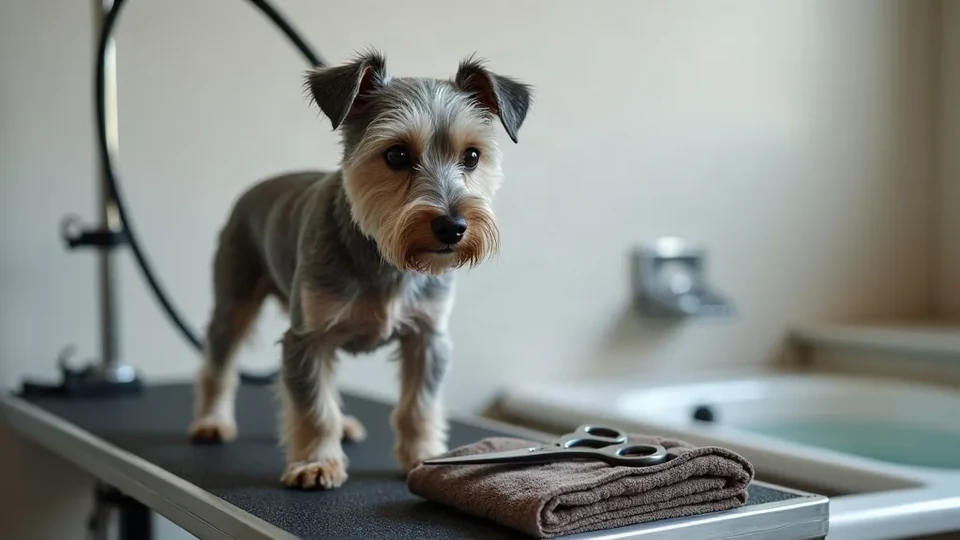
Dog grooming business insurance is a set of separate covers. Which ones you need depends on whether you work from a salon, a home studio or a van. Most owners need liability cover, cover for the client's dog while it is in their hands, and property cover for the tools. A van or staff adds auto and workers' compensation.
1. General liability: when a client or a visitor gets hurt
General liability pays when your business is held responsible for hurting someone or damaging their property. The U.S. Small Business Administration describes it as protection against bodily injury, property damage, medical expenses, libel, slander and the cost of defending lawsuits.
In a grooming shop, that means the client who slips on a wet floor at pickup. It also means the visitor who gets bitten in your waiting area.
The catch is what it leaves out. Injuries to your own employees are excluded because workers' compensation is meant to handle them. Auto liability is excluded too, because a business auto policy covers it. Ask for the per-claim limit and the yearly limit, and write both down.
2. Cover for the dog in your hands
A client's dog is in your care, custody and control from check-in to pickup. The California Department of Insurance lists "care, custody, and control" among the major exclusions of a commercial general liability policy. The same guide describes separate legal liability cover for property of others that sits in your business's hands.
The gap matters because the worst day in this trade is not a slip in the lobby. It is a dog hurt on your table, in the dryer or in the tub, and an owner asking who pays the vet.
Insurers that sell to pet businesses give this cover its own name. Pet Care Insurance is one of them. It says generic business insurance rarely protects pets in your care, custody and control. It calls the fix animal bailee insurance. It says this pays vet bills for a pet injured while with you and covers claims about pet injury or loss. Other insurers and brokers may use other names, so describe the situation rather than the label. Escape is worth its own question. Ask whether a dog that slips its lead at pickup or bolts from the van is covered.
Do not assume. Ask the broker in plain words which policy pays if a dog is injured while you are grooming it. Find out whether there is a separate limit for it, and what the policy says about a dog that dies in your care.
The Small Business Administration also names professional liability for service businesses, which protects against malpractice, errors and negligence. Check whether that sits inside the dog-in-care cover or is priced on its own.
3. Property cover for clippers, dryers and the tub
Your tools are expensive and easy to lose in one event. A fire, a burst pipe or a break-in can take the table, the dryer, the clippers, the tub and the shampoo in one night.
Many small shops buy this as a business owner's policy (BOP). The Insurance Information Institute (Triple-I) says a BOP bundles property cover, business interruption cover and liability protection. Business interruption pays for lost income while a covered loss keeps you closed.
Triple-I is just as clear about the limits. A BOP does not cover professional liability, auto, workers' compensation, or health and disability insurance. Keep that sentence in mind when someone says a bundle covers everything.
Before you talk to a broker, list every tool with what it cost. That way the property limit comes from a count. Our Grooming Business Starter Kit has a start-up cost calculator for exactly that list.
4. Business auto for a van
If you groom in a van, the vehicle is the biggest risk you own. Triple-I explains that a personal auto policy may not cover a vehicle used primarily in business. It adds that a vehicle owned by a business has no cover under a personal policy at all.
A commercial policy of this kind covers liability, uninsured and underinsured motorist protection, medical payments and damage to the vehicle itself. Triple-I notes the business auto form can also extend to autos your business does not own.
Ask one more question that is specific to a van. Does the policy cover the grooming equipment bolted into the van, or does that belong on the property policy? Also ask whether a dog in the van is covered while you are driving.
If you have a salon and never drive for work, skip this entry.
5. Workers' compensation once you hire
Workers' compensation pays for work injuries to employees. The U.S. Small Business Administration says businesses with employees need it, and that laws requiring insurance vary by state.
Groomers get bitten, scratched and strained from lifting dogs onto tables. That is exactly why a bath assistant or a part-time groomer changes your insurance picture the day they start.
Your own state decides the details, including whether an owner without staff must carry it and how a groomer who rents a chair counts. Ask the state workers' compensation office and your broker, and get both answers in writing.
6. A home studio is not covered by your homeowner's policy
Many first-time owners groom in a garage or a spare room. Triple-I says a typical homeowner's policy provides only $2,500 of cover for business equipment, which is usually not enough. It also says you need liability cover in case clients get hurt on your premises.
A homeowner's liability add-on is usually written for businesses with few visitors. A grooming studio has a client at the door twice per dog, plus a dog on a table.
Tell your homeowner's insurer exactly what you plan to do at home, and ask for the answer in writing. If the answer is no, you need a business policy.
How to choose dog grooming business insurance for your setup
Match the covers to the place you work, not to a package name. The table shows which of the six entries to raise for each setup.
| Your setup | Raise these entries | Watch for |
|---|---|---|
| Rented salon, no staff | 1, 2, 3 | Landlord may require liability limits and a certificate |
| Rented salon with staff | 1, 2, 3, 5 | Owner and employees are treated differently in many states |
| Home studio | 1, 2, 3, 6 | Homeowner's policy may refuse the business |
| Van, no staff | 1, 2, 3, 4 | Equipment in the van, and dogs in the van |
| Van with staff | 1, 2, 3, 4, 5 | Who drives, and who is named on the auto policy |
Here is the short version of what each cover pays for and where it stops.
| Cover | Pays for | Usually not included |
|---|---|---|
| 1 General liability | Injury or damage to other people and their property, legal defense | Your employees' injuries, auto liability, your own property |
| 2 Dog in your hands | Ask the broker: injury or loss of a dog in your care | Often a gap in a standard liability policy |
| 3 Property or BOP | Tools, dryers, tub, stock, lost income while closed | Auto, workers' compensation, professional liability |
| 4 Business auto | The van: liability, damage, medical payments | Personal-use policies may refuse a business vehicle |
| 5 Workers' compensation | Work injuries to employees | Rules differ by state |
| 6 Home studio add-on | Business equipment and visitors at home | A typical homeowner's limit of $2,500 for equipment |
The cover that matters most to a groomer is the one nobody mentions at the sales counter: what pays when a dog is hurt in your hands.
What moves the price of a policy
The California Department of Insurance describes the basic formula as rate multiplied by exposure. For general liability the exposure can be square footage, payroll or gross sales. Property cover looks at size, construction and fire protection.
Here is arithmetic from invented example assumptions, not a quote. Say a broker applies a liability rate of $5 per $1,000 of gross sales. A salon with $90,000 of yearly sales has 90 units of $1,000, and 90 times $5 is $450. If sales rise to $120,000 next year, the same rate gives 120 times $5, which is $600. Real rates differ by insurer, state and class, so use this only to see how the formula moves.
Triple-I also says your past claims history predicts future claims, and a higher deductible lowers the premium. A bigger deductible only makes sense if you could pay it tomorrow.
Four questions to ask a broker
Read these out loud at the start of every quote call.
- If a dog is injured or lost while I am grooming it, which policy pays and what is its limit?
- Does this policy count a van, a mobile unit or a home studio as covered premises?
- What is excluded for animals, bites, sedation or grooming accidents?
- Will you give me the answers and the limits in writing?
Get at least two quotes with the same limits. Prices are only comparable when the covers match.
Ask your broker and your state's workers' compensation office about renting a chair to another groomer, and ask for each answer in writing.
Where a template does not help
Nothing on this page replaces a licensed broker, and a template cannot insure anything. If you are already set up and only need to renew, you do not need a kit at all. Your broker's summary of coverage is the document that counts.
A template helps with the part before the call. It gives you a single page where the covers, limits, renewal dates and broker's phone number live. The business plan template in our Grooming Business Starter Kit has a field for insurance in its operations part.
Free printable forms and templates can be enough if you only need one page to write on, and you already know what goes on it. Our Grooming Business Starter Kit costs $29.99 for eight products as fillable files in US Letter and A4. The 32-page business plan template has a worked example of an invented salon on every other page. The start-up cost calculator comes with an opening checklist. The client intake form and the service agreement come with it. Four more files cover prices, cards and social posts. The kit fits a salon, a home studio or a van, alone or with staff, and the price list and intake form also have room for cats. It is the wrong choice if you are already open and only renew a policy, or if you want someone to quote or sell you insurance, which it does not do.
Frequently asked questions
What type of insurance do dog groomers need?
Most groomers start with general liability for injuries and damage to other people's property, and add cover for the dog in their care, property cover for tools, business auto for a van, and workers' compensation once they have employees. Which of these apply depends on your setup and your state, so go through the list with a broker.
Should a dog groomer have insurance?
Yes. A groomer holds someone else's animal for hours with clippers and shears in hand, and the small business guidance from the U.S. Small Business Administration and Triple-I describes liability, property and, for staff, workers' compensation cover as the basics. A personal policy usually does not respond to business losses.
How much does insurance cost for a dog grooming business?
There is no single figure. The California Department of Insurance explains that a premium is a rate multiplied by an exposure, and for liability the exposure can be gross sales or payroll. Past claims and the deductible you choose also move the price, so ask two or three brokers for quotes on the same limits.
Conclusion
Start with the setup you actually have. It is a rented salon, a spare room or a van. Write down the six covers, mark which ones apply, and take that page to a broker with the four questions from the script above. Ask for each answer in writing. Keep the policy summaries somewhere you can find them on the day a client calls about a nicked ear.
Sources
- U.S. Small Business Administration, Get business insurance (undated). Last checked October 7, 2026.
- Triple-I (Insurance Information Institute), What does a business owners policy (BOP) cover? (undated). Last checked October 7, 2026.
- Triple-I (Insurance Information Institute), Business Vehicle Insurance (undated). Last checked October 7, 2026.
- Pet Care Insurance, Care, Custody, and Control (undated). Last checked October 7, 2026.
- California Department of Insurance, Commercial Insurance Guide (undated). Last checked October 7, 2026.
- Triple-I (Insurance Information Institute), Insuring Your Home-based Business (undated). Last checked October 7, 2026.
- Triple-I (Insurance Information Institute), Liability Insurance (undated). Last checked October 7, 2026.